

A Friendly Convergence Sparks Potential Pancreatic Cancer Breakthrough
Innovative SU2C-funded research program fuels a powerful collaboration, clinical trial of mRNA treatment vaccine
If Hollywood wanted to make a science-themed buddy movie, the story of Vinod Balachandran, MD, and Benjamin Greenbaum, PhD, might just fit the bill. Both are researchers at Memorial Sloan Kettering Cancer Center (MSKCC) in New York City. They’re also close friends and scientific partners who have helped to produce a potential breakthrough in the treatment of one of the most notorious diseases: pancreatic cancer.
Fittingly, their powerful research collaboration and ultimately, their friendship, came about because of their involvement in a research program called SU2C Convergence™. Launched by Stand Up To Cancer (SU2C) in 2014, SU2C Convergence was designed to bring together unlikely lab fellows, assembling research teams composed of experts from disciplines as varied as engineering, data science, immunology, mathematics, materials engineering, and genomics.
In the case of Drs. Balachandran and Greenbaum, SU2C Convergence connected a surgeon-scientist who specializes in gastrointestinal cancers and a theoretical physicist turned computational biologist. Despite their vastly different scientific backgrounds, at the time they formed their partnership, each had their sights trained on a making immunotherapy work against pancreatic cancer.
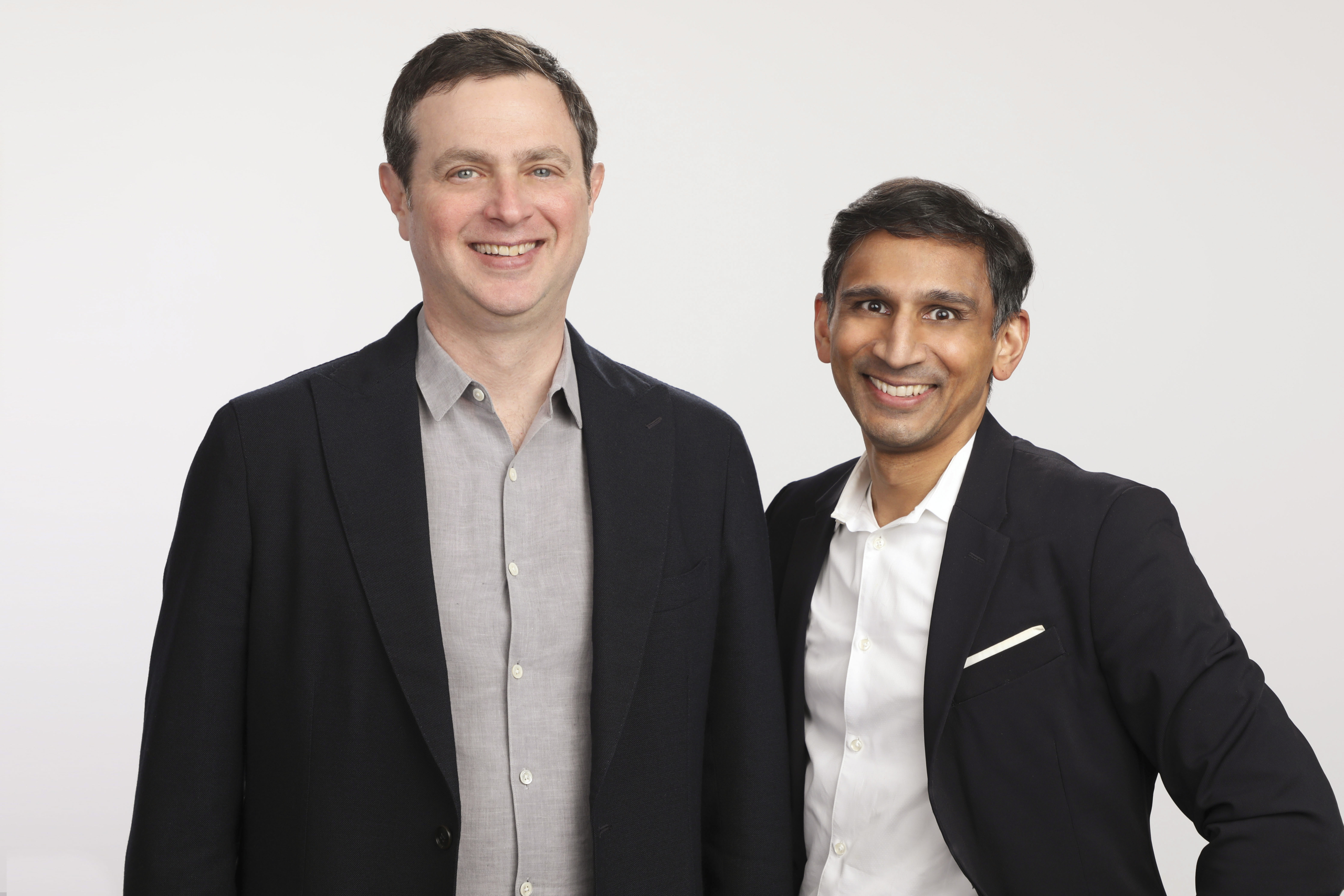
Drs. Vinod Balachandran and Benjamin Greenbaum at the SU2C Scientific Summit 2024.
Based on the results thus far, they appear to be on the right track.
In collaboration with their team, the duo discovered the rationale for, designed, and led a clinical trial of an experimental mRNA treatment vaccine in people with early-stage pancreatic cancer. As initially reported several years ago, of the 16 trial participants, half had a strong, long-lasting immune response to the vaccine.
Today, seven of these eight ‘responders’ are still alive, some up to six years after completing the treatment, Dr. Balachandran reported recently at a cancer research meeting. And six of the seven remain cancer free.
When compared with what typically occurs in this cancer, it’s clear to see why their work has generated so much excitement. Historically, about 80% of people with early-stage pancreatic cancer who have undergone surgery to remove their tumors have a recurrence within the next year or so, and less than 30% live for more than 5 years.
Drs. Balachandran and Greenbaum stressed that their achievements thus far represent a truly collective effort of their entire team. They also acknowledge that it will require a much larger study—which is already ongoing—to know whether this treatment is the gamechanger they hope it is.
And none of it may have come about without SU2C Convergence™.
“The funding model really … allowed us a space and a structure within which we could build and grow our teams and in parallel, build the science behind this [vaccine],” Dr. Balachandran said. “So, I think this is really possible only because of the vision of Stand Up’s Convergence [program].”
A model ahead of its time
The term convergence, and the scientific model it advocated, was coined in 2011 by longtime SU2C Scientific Advisory Committee Chair and Nobel Prize Laureate Phillip Sharp, PhD, and several colleagues at MIT. As they described it, convergence is “an ongoing merger of life, physical, and engineering sciences.”
According to Arnold Levine, PhD, longtime vice-chair of SU2C’s Scientific Advisory Committee, their premise was that this merger could usher in a new revolution in biomedical research and medicine. And in the early 2010s, Drs. Sharp, Levine, and other SU2C leaders believed that cancer could be the model’s ideal proving ground.
They felt strongly, Dr. Levine said, that incorporating these “new directions” in cancer research could “break open problems.”
The first SU2C Convergence teams, or SU2C Convergence 1.0, were formed in 2014, with a focus on unearthing the secrets of how and why cancers do and don’t respond to different cancer treatments.
At the time, Dr. Balachandran, already at MSKCC, was an established researcher and clinician. And Dr. Greenbaum, having completed his doctorate in theoretical physics at Columbia University, had taken his expertise about a mile or so across New York City to Mount Sinai School of Medicine, applying it to developing computational methods for modeling how the immune system interacts with tumors.
Although their paths had not yet crossed at that point, each ended up as a junior investigator on an SU2C Convergence 1.0 team tasked with making strides in immunotherapy to treat pancreatic cancer.
One of the team’s leaders suggested that, given their overlapping research interests, the two should meet—which they did at the SU2C Scientific Summit 2017. As Dr. Balachandran explained, the duo quickly realized that their experiences and expertise, while vastly different, “were very complementary” and could help accelerate their scientific goals.
As Dr. Levine put it: “A surgeon and a physicist come together and they have different [scientific] languages.” But from the perspective of convergence, he continued, “they actually are the perfect team.”
SU2C Convergence 2.0: Trying to succeed where many others have failed
Based on their encouraging conversations, the duo decided to apply for SU2C Convergence 2.0, which provided funding to seven research teams to use AI and advanced computing to develop and enhance cancer immunotherapy.
Their application—built on findings from two studies performed by their SU2C Convergence 1.0 team in which each played central roles—was successful, and they were awarded funding to establish a team that would develop a treatment vaccine for pancreatic cancer.
At that point in the late 2010s, studies of immune-based treatments for pancreatic cancer had all failed. That led many researchers to conclude that this cancer simply wasn’t amenable to immunotherapy, in large part because the immune system didn’t seem to “see” pancreatic cancer, meaning there was no underlying immunological foundation to work from. Many viewed it as akin to trying to restore an old car with a rusted, hole-infested frame and parts that are no longer available: there’s little to nothing to work with.

Cancer cells shuttle pieces of abnormal proteins to their surface, which can attract the immune system’s attention.
Credit: Adapted from World J Surg Onc. September 2022. https://doi.org/10.1186/s12957-022-02776-y. CC BY 4.0.
But the SU2C Convergence 1.0 team had shown that maybe the holes in the frame and rust weren’t as bad as previously thought, that there is an immunological baseline to work from—you just needed the right tools, including advanced computational approaches, to find it. That baseline came in the form of something called neoantigens: abnormal proteins that form only in cancer cells and can act as a signal to the immune system that something is wrong.
In the small percentage of people who are long-term survivors of pancreatic cancer, the 1.0 team had found, their tumors were intensely signaling to the immune system—signaling fueled by neoantigens. But the signaling came from specific neoantigens that differed from person to person.
So, for SU2C Convergence 2.0, “that led to … the decision to do a clinical trial with a personalized neoantigen vaccine,” Dr. Greenbaum said.
A small clinical trial with potentially huge results
Many people don’t realize that mRNA vaccines were already being studied as possible treatments for cancer long before the COVID-19 pandemic. At the time the SU2C Convergence 2.0 teams were formed, in fact, several companies had already been developing mRNA vaccines to treat cancer.
With some very strong evidence to support their idea of individually tailored mRNA neoantigen vaccines and a fully assembled SU2C Convergence 2.0 research core, Drs. Balachandran and Greenbaum were able to bring on board two of these companies, the German firm BioNTech and the U.S.-based Genentech, to develop and manufacture a personalized mRNA neoantigen vaccine (formally called autogene cevumeran) for a clinical trial.
Despite being designed to treat a small number of patients at the same hospital, the trial was far from simple. The experimental treatment wasn’t just sitting in the hospital, in a cooler or on a shelf, waiting to be given to a patient on a moment’s notice. There was a complex process that had to happen first.
As Dr. Balachandran explained: “Patients would undergo surgery [to remove the tumor in their pancreas] in New York. Then we would ship the tumors to Germany within 72 hours, where [BioNTech scientists] would analyze the tumors, manufacture the vaccines, and send them back to us to give to the patient.”
The first patient in the trial was treated in December 2019. Within a few months, the world was in the throes of a global pandemic.
“Now we had all of these challenges posed by the pandemic … hospitals were shut down, there were global supply chain disruptions, which was very important for this trial because it involved real-time, cross-Atlantic transfer of both patient material and drug,” Dr. Balachandran said. “And, not to mention of course, BioNTech now had this slight distraction to make mRNA vaccines to save the world.”
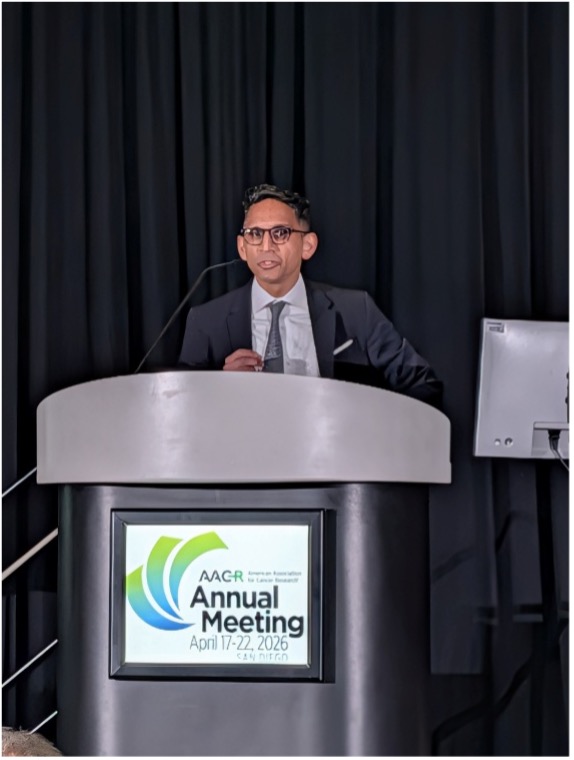
Dr. Balachandran providing an update on results from the mRNA personalized neoantigen vaccine trial at the 2026 AACR Annual Meeting.
In the end, the trial was fully enrolled much faster than the team had anticipated. The excitement in the research community was palpable after the initial results revealed the strong immune responses among half of the trial participants. Subsequent trial updates, including that there had been only one cancer recurrence and one death among those who had an immune response, ramped up the enthusiasm even more.
In data presented in April 2026 at American Association of Cancer Research annual meeting, Dr. Balachandran reported that not only are these seven trial participants still alive, with no additional recurrences, but he also explained that their immune systems still have immune cells in their blood that recognize their vaccine-induced neoantigens.
Genentech and BioNTech are conducting a larger clinical trial of autogene cevumeran in people with early-stage pancreatic cancer, with the plan to enroll more than 250 patients being treated at cancer centers across the United States as well as in Canada and parts of Europe.
A different kind of convergence
Although their SU2C Convergence 2.0 team has ended, Drs. Balachandran and Greenbaum continue to work closely together (Dr. Greenbaum joined Memorial Sloan Kettering in 2020). Today, they co-direct The Olayan Center for Cancer Vaccines at MSK, an academic accelerator focused on rapidly translating research discoveries into new vaccines.
As part of that work, they are studying mRNA neoantigen vaccines as potential treatments for other cancers and in more advanced forms of cancer. This is being done through what they call a “lab-in-a-loop” model, which allows patient treatment to immediately inform the development of the next generation of vaccines.
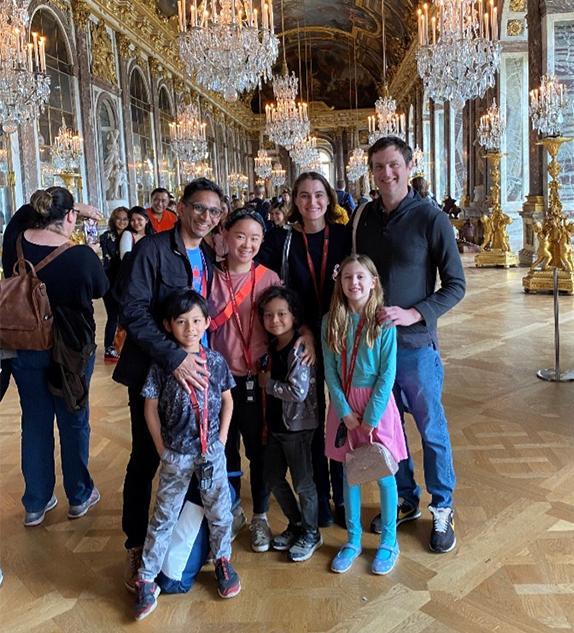
Drs. Balachandran and Greenbaum’s close friendship includes family vacations.
Despite extremely busy schedules, they’ve also maintained a strong friendship—one that often includes their families. Both families even traveled to Paris together, a vacation they were able to piggyback on to a research meeting Drs. Balachandran and Greenbaum were attending.
Dr. Balachandran recalled a daytrip to the Palace of Versailles: “[Our] kids were running around the gardens and we were trying to keep up, while inevitably slipping into the kinds of conversations we always have, about immune recognition, vaccines, and how complex systems are organized,” he said. “It’s a good example of how our collaboration doesn’t really switch off outside the lab. There’s a continuity and comfort across work and life that, in a very real way, strengthens how we think and work together.”
Published on September 25, 2026


