Bacteria Inside Tumors May Drive Response to Immunotherapy in Colorectal Cancer
High bacteria levels in tumors may make immune-based treatments more effective
Numerous studies have found that the mix of bacteria in the human gut, or its microbiome, can affect how well some treatments work against certain cancers. Now, a new study has found that the amount of bacteria inside tumors in people with colorectal cancer may directly affect their immune system and how well immunotherapy will work.
Funded in part by Stand Up To Cancer, the study revealed strong links between large amounts of bacteria in colorectal cancer tumors and longer survival in people with advanced colorectal cancer. The study also found a strong connection between bacteria levels in tumors—known as the intratumoral microbial burden, or ITMB—and the activity of critical components of the immune system in those tumors, particularly in people with colorectal and stomach cancer.
Led by scientists at the University of Texas MD Anderson Cancer Center in Houston and Memorial Sloan Kettering Cancer Center (MSKCC) in New York, the study also showed that, in mouse models of colorectal and breast cancer, immunotherapy wasn’t effective against tumors in which bacteria levels had been intentionally decreased. The findings were published in Cancer Discovery.
“There seem to be a very clear connection between microbes, immune system activation, and better outcomes,” said the study’s lead researcher, Florencia McAllister, MD, who specializes in treating gastrointestinal cancers at UT MD Anderson.
Dr. McAllister cautioned that there’s still a lot to learn about the interplay of bacteria in tumors, the immune system, and immunotherapy. But the results, she continued, suggest that tumors’ bacterial load could be important in a number of different ways, including “response to immunotherapy and other therapies, and it could even affect [patients’] prognosis.”
Probing interactions between bacteria and the immune system
The human body is home to trillions of bacteria. They’re on our skin, in our nose, on our hair. But the greatest abundance of bacteria is in the gastrointestinal tract, or gut, which spans the top of the esophagus to the anus. These bacteria are intimately involved in basic biological processes, in maintaining our health and, sometimes, upending it.
With an uncanny ability to maneuver and thrive in even the most inhospitable environments, it’s not surprising that bacteria also find their way into tumors. Many studies have analyzed the mix of different bacterial species in the gut of people with cancer and in their tumors, often linking the presence of specific types of bacteria with how well certain treatments work.
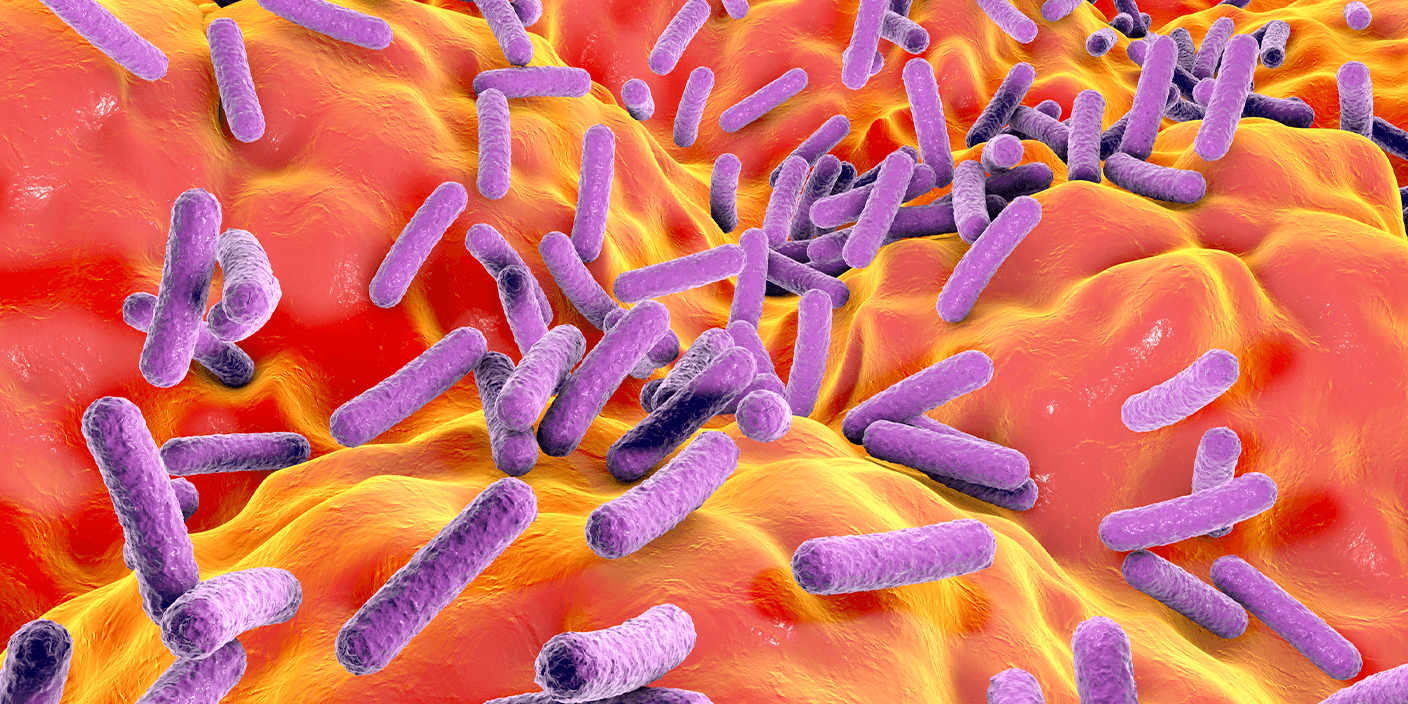
In this study, however, Dr. McAllister said the research team wanted to learn more about the quantity of bacteria in different types of tumors and whether—and how—it affects their interactions with the immune system.
They began by analyzing existing data on thousands of tumor samples collected from people with seven different cancers, including colorectal, stomach, breast, brain, uterine, lung, and pancreatic. Tumors in people with colorectal and stomach cancers, they discovered, consistently had the highest bacterial loads.
Zeroing in on these two cancer types, they conducted a series of analyses to better understand the potential effects of high bacteria levels on tumors.
For example, they showed that people with advanced colorectal cancer whose tumors had a high ITMB had tended to live substantially longer than those with low ITMB. And colorectal tumors with high ITMB, they reported, had evidence of revved up immune system activity, including an overabundance of infection-signaling immune cells called mast cells.
Members of this same research team, including study co-leader Luis Diaz, MD, of MSKCC, were part of an earlier SU2C-supported clinical trial that reported remarkable results using an immunotherapy drug to treat people with rectal cancer. All patients in the trial had tumors with genetic changes commonly described as dMMR, and every patients’ tumor was eliminated by an immunotherapy drug known as an immune checkpoint inhibitor.
In this new study, they analyzed tumor samples from a group of participants from that trial. Following the immunotherapy treatment, they consistently saw a spike in ITMB. Tumors also had an influx of mast cells and those mast cells also contained hefty amounts of bacteria.
They also performed experiments in mouse models of colon and breast cancer in which tumors always shrink following treatment with immune checkpoint inhibitors. When they used antibiotics to selectively kill off bacteria in the animals’ tumors, the drugs were no longer effective.
Different cancers, different outcomes
Although high ITMB appears to be beneficial in colorectal cancer, it may have the opposite effect in other cancers. In one recent study focused on head and neck cancers—which form in the throat and oral cavity—a high ITMB was linked with tumors being resistant to immunotherapy.
The finding isn’t necessarily contradictory, Dr. McAllister explained. It’s well established that the type and overall quantity of bacteria in certain parts of the body can be substantially different than in others. And those bacteria can interact with the tissue and other components in each part of the body differently. “So, then this relationship [between bacteria and immune cells] in the gut may be quite different than it is at more distant sites in the body,” she said.
Although more and more studies are being done, there’s still much to learn before a measure like bacterial burden can used to make decisions about patients’ cancer care, said Dr. McAllister, who leads the Tumor Ecosystem Center at MD Anderson.
As this and other studies have shown, she continued, there are many ways that bacteria interact with and affect tumors—and their relationship is not a simple two-way street.
“Tumors exist in an ecosystem,” she continued, “and microbes are just one part of that ecosystem.”
Published on October 5, 2026